
Open Now— 24/7 Emergency Room · No Wait · Walk-Ins Welcome ·Call [PHONE]
Emergency medical team evaluating a patient with chest discomfort in Houston
Open 24/7 · Emergency Physicians · Houston 77070

24/7 Cardiac & Circulatory Emergency Care in Houston, TX 77070

Get emergency physician-led evaluation for chest pain, possible heart emergencies, abnormal rhythms and suspected blood clots, with on-site EKG and diagnostic testing.

Cardiac Emergency Care Houston

Chest Pain and Clot Symptoms Cannot Wait

Chest pain, sudden shortness of breath or symptoms of a blood clot can signal a life-threatening emergency. They can also result from less dangerous conditions, but it is not safe to make that distinction at home.

NorthStar provides 24-hour emergency evaluation with on-site EKG, cardiac and blood-clot markers, CT, digital X-ray, bedside ultrasound and laboratory testing. If heart attack or pulmonary embolism is possible, call 911 instead of driving yourself.

Minutes matter: A heart attack may begin with severe pain or with mild pressure, nausea, unusual fatigue or discomfort that comes and goes.
Chest Pressure or Pain
Sudden Shortness of Breath
Rapid or Irregular Heartbeat
Fainting or Severe Weakness
One-Sided Limb Swelling
Pain With Deep Breathing
Chest Pain Emergency Room

Chest Pain and Chest Discomfort

Chest pain may feel sharp, dull, burning, aching, tight, heavy or pressure-like. Its intensity does not reliably reveal how serious the cause is.

CAUSE

Possible Causes of Chest Pain

Heart, lung, blood vessel, digestive, muscle and anxiety-related conditions may feel similar.

Conditions physicians may consider
  • Heart attack, unstable angina or abnormal rhythm
  • Inflammation involving the heart
  • Pulmonary embolism or aortic disease
  • Pneumonia, collapsed lung or asthma
  • Rib, muscle or chest-wall injury
  • Esophageal or stomach conditions
  • Anxiety or panic symptoms

Do not assume new or unexplained pain is indigestion, anxiety or a pulled muscle when warning signs are present.

ATYP

Heart Symptoms May Be Mild or Atypical

A heart attack does not always begin with severe chest pain.

Symptoms that can be overlooked

Symptoms may improve and return. Women, older adults and people with diabetes may experience shortness of breath, nausea, back or jaw discomfort, lightheadedness, unusual fatigue or weakness without dramatic chest pain.

Call 911 when heart-attack symptoms are possible, even when you are uncertain.

MVC

Chest Pain After an Accident

Evaluation after seat-belt force, airbag impact or another chest injury.

Trauma warning signs

Chest pain after a crash may involve ribs, lungs, the heart or major blood vessels. Seek emergency assessment for worsening pain, pain with breathing, breathlessness, palpitations, dizziness, fainting, confusion, coughing blood, deformity, severe tenderness or signs of shock.

Call 911 after major trauma or when breathing, circulation or consciousness is affected.

PREG

Pregnancy and Postpartum Symptoms

Pregnancy and the year after delivery can carry added heart and clot risks.

When to seek help

Chest pain, shortness of breath, fainting, rapid heartbeat or one-sided leg swelling during pregnancy or postpartum deserves prompt medical attention. Tell the team immediately if you are pregnant or recently gave birth.

Call 911 for severe or sudden symptoms.

Emergency care rather than urgent care: When chest pain could involve the heart, lungs or major blood vessels, call 911. Evaluation may require EKG, repeated cardiac blood tests, advanced imaging, monitoring and rapid transfer.
Heart-Attack Emergency Room

Heart Attacks, Palpitations and Other Heart Emergencies

A heart attack occurs when blood flow to part of the heart muscle is blocked. Dangerous rhythm problems and acute heart failure can also cause chest discomfort, breathlessness, dizziness or fainting.

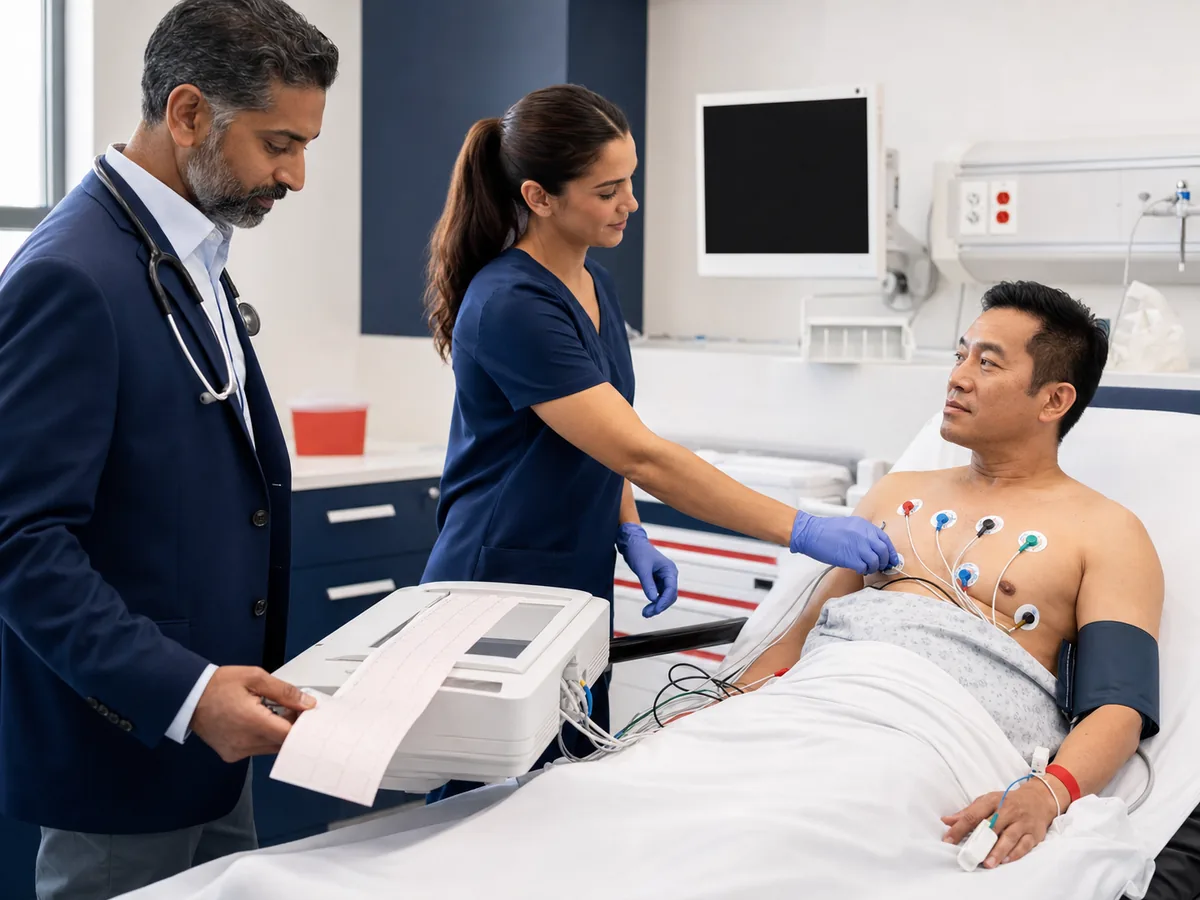
Emergency team performing an EKG during a cardiac evaluation

Possible Heart-Attack Symptoms

  • Pressure, squeezing, fullness or chest pain
  • Arm, back, neck, jaw or stomach discomfort
  • Shortness of breath
  • Nausea, vomiting or cold sweat
  • Lightheadedness or fainting
  • Rapid or irregular heartbeat
  • Sudden unusual fatigue or weakness

Emergency Heart Evaluation

Evaluation may include EKG, cardiac blood markers, repeat testing, chest X-ray, CT, laboratory studies and focused bedside ultrasound. A single normal result does not always rule out a heart emergency.

The physician considers symptoms, risk factors, examination findings and changes over time.

Palpitations & Irregular Rhythm

Racing, pounding, fluttering, skipping or irregular beats can result from a rhythm disorder, medication, stimulant, dehydration, thyroid condition, fever, anxiety or another cause.

Seek emergency care when palpitations occur with chest pain, fainting, severe breathlessness, weakness, confusion or a sustained very rapid heartbeat.

Specialty scope: NorthStar provides emergency physician-led evaluation, stabilization and transfer. This page does not claim an on-site cardiologist, catheterization laboratory, cardiac surgery program or operating room.
ER for Blood Clot Symptoms

DVT and Pulmonary Embolism Emergencies

Deep vein thrombosis forms in a deep vein, often in a leg. If part of the clot travels to the lungs, it can cause a life-threatening pulmonary embolism.

Emergency physician examining a patient for possible DVT symptoms
DVT

Possible DVT Signs

One-sided swelling, pain, warmth or color change may require prompt evaluation.

Symptoms and precautions
  • Swelling in one leg or arm
  • Pain or tenderness, sometimes worse while standing or walking
  • Warmth over the affected area
  • Red or discolored skin
  • A feeling of heaviness or tightness

DVT may not cause obvious symptoms, and other conditions may look similar. Do not massage a limb when a blood clot is suspected.

PE

Pulmonary Embolism Warning Signs

Call 911 for sudden chest, breathing or fainting symptoms.

Call 911 for these symptoms
  • Sudden shortness of breath
  • Chest pain that worsens with a deep breath
  • Rapid breathing or fast heartbeat
  • Coughing up blood
  • Lightheadedness or fainting
  • Severe weakness, sweating or a sense of danger

A pulmonary embolism can begin suddenly or develop more gradually. Treat possible symptoms seriously even when they initially seem mild.

RISK

Blood-Clot Risk Factors

Risk factors guide evaluation but do not confirm or exclude a clot.

Factors that may increase risk
  • Recent surgery, hospitalization or major injury
  • Long periods of limited movement or travel
  • Pregnancy and the postpartum period
  • Estrogen-containing medication
  • Cancer or some cancer treatments
  • Previous DVT or pulmonary embolism
  • Inherited clotting conditions
  • Older age, obesity, smoking or a central catheter
EVAL

Blood-Clot Evaluation and Transfer

Testing and next steps depend on symptoms, risk, circulation and vital signs.

Possible evaluation

Evaluation may include a blood-clot marker, EKG and cardiac testing, CT for suspected pulmonary embolism, or ultrasound when an appropriate vascular study and qualified personnel are available.

NorthStar confirms bedside ultrasound but does not specifically confirm comprehensive venous duplex availability around the clock. A particular DVT scan is not guaranteed without facility verification.

Treatment depends on diagnosis: A confirmed clot may require anticoagulant medication or a hospital procedure. NorthStar can evaluate, stabilize and transfer; this page does not promise a specific drug, procedure or on-site blood-clot specialist.
On-Site Diagnostic Support

Cardiac and Circulatory Testing

The emergency physician chooses testing according to symptoms and risk. Some evaluations require repeated testing, prolonged monitoring or specialized imaging at another facility.

EKG

Records electrical activity and may identify certain heart attacks and rhythm problems.

Cardiac Blood Markers

Clinically appropriate blood tests may help identify injury to heart muscle.

Blood-Clot Markers

May help assess selected patients for possible clotting conditions.

Digital Chest X-Ray

May reveal certain lung, heart-size, injury or chest-related causes.

Multi-Slice CT

Detailed imaging for selected chest and vascular emergencies.

Bedside Ultrasound

May support selected heart, lung and circulation assessments.

Laboratory Testing

May identify anemia, infection, electrolyte changes and organ-function concerns.

Repeat Testing

Some heart changes develop over time, so EKG or blood work may be repeated.

Transfer Coordination

Specialty cardiac, vascular, surgical or intensive care can be arranged when needed.

Physician-Directed Care

Emergency Stabilization and Treatment

Care begins according to medical urgency and the suspected condition. No medication, procedure or outcome is promised before evaluation.

Immediate Assessment

Vital signs, oxygen level, alertness and high-risk symptoms are evaluated promptly.

Heart-Rhythm Monitoring

Monitoring and reassessment may identify rhythm or vital-sign changes.

IV Access

May support testing, medication or emergency stabilization when medically appropriate.

Oxygen When Indicated

Supplemental oxygen is based on oxygen level, breathing and clinical findings.

Physician-Directed Medication

Medication depends on the suspected diagnosis, bleeding risk, allergies and health history.

Repeat Evaluation

Symptoms, EKG findings or blood work may be reassessed over time.

Clear Next Steps

Safe discharge includes warning signs and appropriate follow-up instructions.

Stabilization & Transfer

Higher-level cardiac, vascular, intensive or surgical care can be coordinated when required.

Your Emergency Visit

What to Expect at NorthStar

Immediate Triage

Chest pain, severe breathlessness and clot symptoms are assessed for urgency.

Physician Assessment

Review symptom timing, character, spread, triggers and medical and family risks.

EKG & Testing

Cardiac or clot blood work, X-ray, CT, ultrasound or other labs may be ordered.

Treatment & Monitoring

Medically appropriate care begins, with repeated testing when necessary.

Disposition

Receive safe discharge guidance, continued observation or coordinated transfer.

Why NorthStar

Emergency Cardiac Evaluation in One Location

Open 24/7

Emergency physicians available nights, weekends and holidays.

EKG & Blood Testing

Confirmed on-site cardiac markers, clot markers and laboratory support.

Imaging On Site

Confirmed digital X-ray, CT and bedside ultrasound capabilities.

Houston 77070

Convenient to Cypresswood, Spring, Klein and Willowbrook.

Helpful Answers

Cardiac & Circulatory Emergency FAQs

Should I go to urgent care or the emergency room for chest pain?

When chest pain could involve the heart, lungs or major blood vessels, call 911 and seek emergency-level care. Do not wait at an urgent care clinic or drive yourself if heart-attack symptoms are possible.

What does heart-attack chest pain feel like?

It may feel like pressure, squeezing, fullness, heaviness, burning or pain. It can spread to the arms, back, neck, jaw or stomach and may occur with shortness of breath, nausea, sweating or lightheadedness.

Can a heart attack occur without severe chest pain?

Yes. Symptoms can be mild or less typical, particularly in women, older adults and people with diabetes. Shortness of breath, nausea, unusual fatigue, back or jaw discomfort and lightheadedness can be warning signs.

Can NorthStar test for a heart attack?

NorthStar confirms on-site EKG and cardiac-marker testing. Evaluation may require repeated tests, monitoring and transfer based on the results and clinical risk.

Is a cardiologist available at NorthStar?

An on-site walk-in cardiologist is not confirmed. NorthStar provides emergency physician-led evaluation and can transfer patients who need interventional cardiology or another specialist.

Is chest pain after a car accident an emergency?

It can be. Chest pain after impact may involve ribs, lungs, the heart or major blood vessels. Seek emergency assessment for pain, breathlessness, fainting, rapid heartbeat, coughing blood or significant trauma.

What does a DVT feel like?

DVT may cause one-sided swelling, pain, tenderness, warmth or discoloration, often in a leg. Symptoms are not always present, and only medical testing can confirm the diagnosis.

When should I go to the ER for a blood clot?

Seek prompt emergency evaluation for possible DVT. Call 911 for sudden shortness of breath, chest pain with breathing, coughing blood, fainting or other possible pulmonary-embolism symptoms.

Does NorthStar treat DVT?

NorthStar can evaluate and stabilize suspected blood clots and arrange transfer for specialized imaging or treatment. The exact treatment depends on the diagnosis, location and severity.

What should I bring?

If readily available, bring identification, medication and allergy lists, prior EKGs or cardiac records and relevant medical history. Do not delay emergency care to gather documents.

Houston, TX 77070 · Emergency Evaluation 24/7

Get Emergency Help for Chest Pain or Blood-Clot Symptoms

Call 911 for chest pressure, severe shortness of breath, fainting, possible heart-attack symptoms or possible pulmonary-embolism symptoms. Do not drive yourself.

Call NowGet Directions